I wanna take your photograph while the light's still good
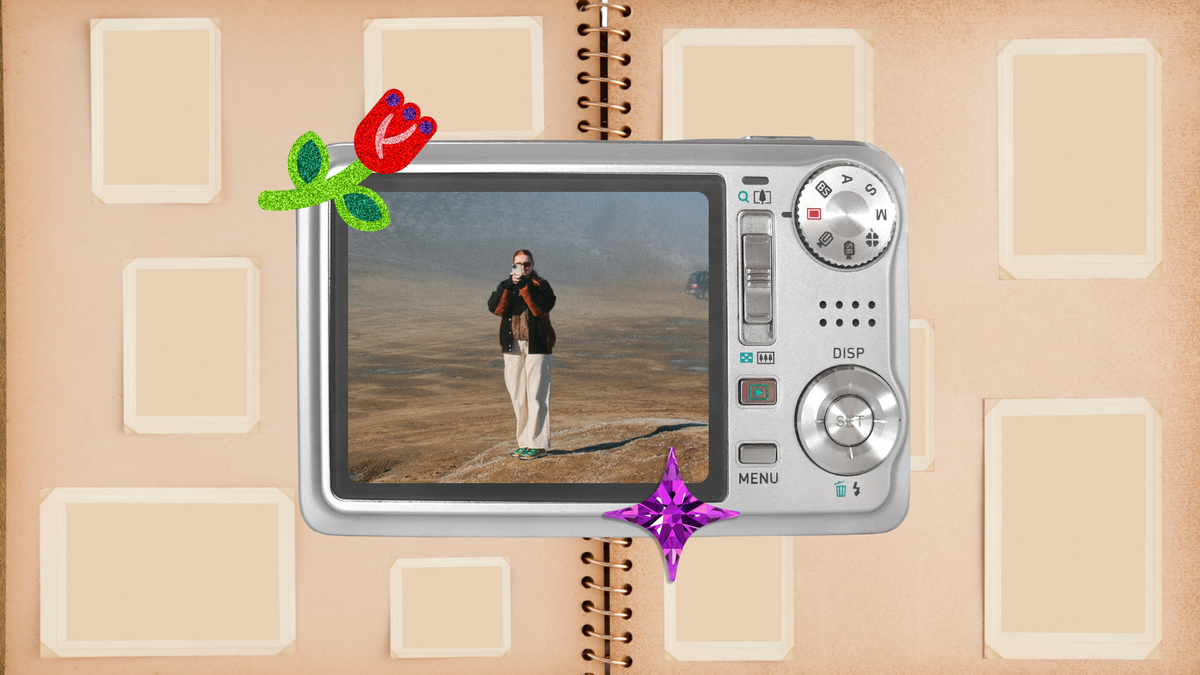
There are almost 80,000 photos in my camera roll from the past 10 years of my life. I am a prolific documenter; famously the friend that is always insisting on a photo, and often found with my Instax camera in hand. By contrast, there are only a handful of photos of my great-grandmother Elizabeth. I’m not sure why, possibly they’ve just been lost over the years, or some other branch of the family has them. She died forty years ago, in 1986.
If I have a great-grandchild, I wonder how many of my 80,000 photos will remain into their adulthood. Will they be able to access a digital archive of the hundreds of thousands of photos I took in my lifetime? All the cats I met, the meals I ate, the near-identical selfies? Will they care enough to look? Is that who I’m keeping the photos for?
I think I’m driven to take photos because I want visual proof of the goodness and the realness of my life. I sometimes spend too much time in my head and not enough in the present moment; by creating a record of events, I ensure that I’ve got a space to reflect on what’s happened in my life. Sometimes it’s more accurate - the good and the bad - than my own memories. I feel compelled to take photos even in potentially inappropriate moments, because I fear that my own fallible memory is not enough to do justice to the minutiae of life. I have photos of myself crying, photos tracking the healing of my wounds post-various surgeries, photos of funerals, photos of bad hair days and car accidents and dead bugs.
Most of us spend most of our time disengaged from the present. Aside from the chaos that endless scrolling has wrought upon our attention spans, we’re also constantly anxious and dissociative as a result of the impending collapse of society as we know it (or at least, I am). Sometimes the camera can actually be a way toward focusing on what’s in front of you and imprinting a distinct moment into your brain. It’s not a perfect solution but it’s a handy tool.
In direct opposition to my massive camera roll, I - like everyone else - use my Instagram largely as a highlight reel. It features my friends, whānau, sunny days, outfits I felt good in, celebrations, good meals, things I’m proud of. I know people are quick to critique the use of social media as highlight reel, but I find it quite helpful. I overthink constantly - I focus on the negative, on my failings, the things I don’t have, the people who don’t like me. My Instagram is proof of all the good things, even if I didn’t appreciate them to their fullest in that exact moment. Instagram profile as gratitude journal. Of course we all feel jealous sometimes seeing other people’s milestones and adventures online, particularly if we are in the middle of a very normal or even terrible day. But when we’re feeling more good-natured, I think we can all appreciate how uplifting it is to see that our friends have things to be happy about, things that they’re proud to share.
I’ve always loved pulling out the big burgundy leather photo albums on my parents’ bookshelves and leafing through. You could quite easily sit down and get through them all in an afternoon - one big album contains several years’ worth of my babyhood. At what point does the sheer volume of a collection make it useless? I might be better off selecting my favourite 100 photos from each year (still a very generous collection by 1990s standards), printing them out for photo albums, and deleting the rest of that 80,000 clogging up my camera roll.
And yet, the idea of losing even a single photo seems like a terrible mistake. What if I need to remember the lunch I had on 29th July 2017? That lunch photo adds context and texture to my memory of the time. I remember who I was eating with, where I was, the fact that I wasn’t vegan yet, the fact that I had taught myself to like avocado by then. I am reminded of all the struggles I’ve had with picky eating, and I remember how much (or how little) money I had at the time. That lunch photo, if I spend some time with it, can be a catalyst for recalling a lot of the detail of how I was living at that time. All those lunch photos I could delete would take with them a lot of the ‘evidence’ of what my life looked and felt like at that time. Internally I’m battling with my desire for minimalism (a more curated, usable, accessible collection of photos) and my desire for completionism (to never forget anything that’s ever happened in my lifetime).
Perhaps I just need to understand more about what actually motivates me to pick up that camera - who is the photo for, and why? I could also be more free with the delete button when a photo is no longer of any use to me. I don't want to forget anything, but I also don't want to over-document to the point that it becomes an blur of endless, meaningless photos either. I don't know how much my photo habits will change, but I'd like to take more of a curatorial eye to my camera roll. I like the idea that my descendants would be excited to look through the photos I left behind - not fatigued. That 2017 lunch photo won't mean much to them, but I hope the important photos will.
The title of this essay is borrowed from one of my favourite songs, ‘Black Sands’ by Pen Name. Josh and Jack wrote it about a trip they took to Iceland together.