1000 ways to persuade someone to read Jane Austen
I had to sneak this one in, in the month of Jane Austen's 250th birthday. Happy new year! See you in 2026.
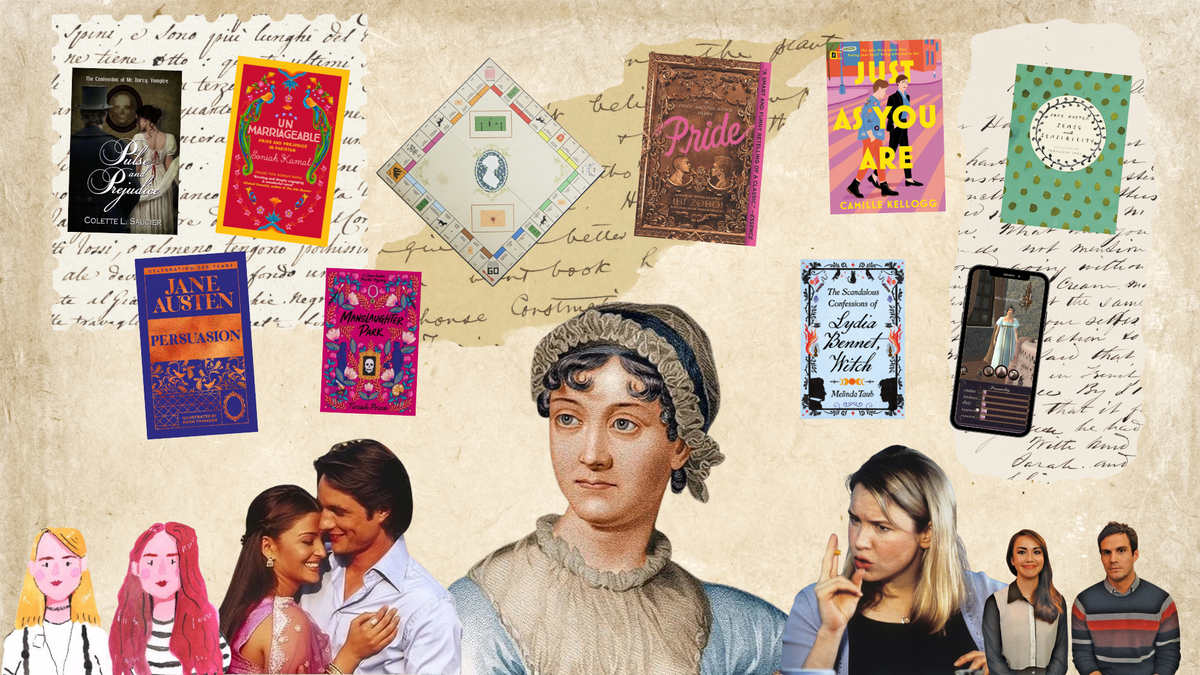
I am the proud owner of 77 copies of Pride and Prejudice. I also have 70-80 copies of Jane Austen’s other novels, or books inspired by them. The collection of inspired books ranges from popular retellings (Pride and Prejudice and Zombies, ugh) to more niche (Most Ardently, a queer and trans re-telling) to super niche (A Crime Through Time, a story in which Georgiana Darcy is transported to the set of the 1995 BBC miniseries, for example. Yes, that one is real) to biographies of Austen, books about Regency history, and more.
Each retelling of Austen's original novels is a different way of asking people to read her stories; an attempt to appeal to a different crowd; a hand reached out to a community of people who want to see themselves reflected in these iconic stories, in one way or another. I don’t think it’s an exaggeration to say that Austen’s storytelling now sits beside Shakespeare, Greek myth, and religious texts as core narratives that are repeated throughout our culture. We turn back to Austen’s stories again and again because of the humour, the romance, the family relationships and friendships, all of which transcend the Regency era (much like Shakespeare’s stories, many of which are super queer, feel like they can be told authentically in any era - even with the original dialogue, Baz Luhrmann’s 1994 Romeo + Juliet felt equally Elizabethan and 1990s).
Many have called Pride and Prejudice the first ‘enemies to lovers’ novel, but Persuasion was also amongst the first ‘slow burn’, ‘yearning’ romances. Emma inspired Clueless; Pride and Prejudice inspired Twilight; Northanger Abbey walked so that films like Scary Movie could run. Austen’s stories feel like a near endless source of inspiration. And all of these books and films sparked by Austen help more people to actually brave reading Austen. If someone hasn’t been convinced to read Austen purely off the basis of her novels’ place in literary history, they might instead be drawn in by a unique book cover that highlights an unexpected aspect of the story, or by a retelling in a different genre or format. There’s a reason why you can find Austen in the form of graphic novels, manga, theatrical audiobooks, improv comedy, video games, plays, musicals. You can find her stories told gender-bent, race-bent, in space, with vampires, modernised, queered, and played with in just about every way imaginable.
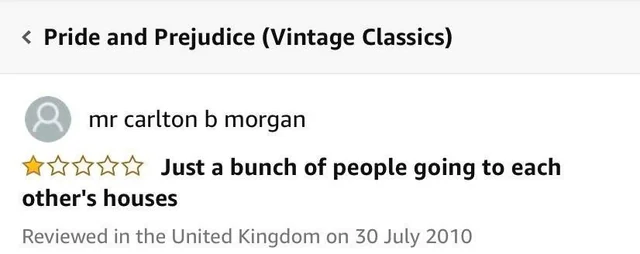
Whether or not you find the Regency era and white middle-class families ‘going to each other’s houses’ to be dry, the heart of the stories shines through. In the hands of creatives across the decades and across the world, Austen’s stories continue to be twisted, stretched, flipped, and delivered to new audiences in unexpected new ways. Some of them completely miss the mark, and lose the essence of Austen (it’s almost always her humour and subtlety that are lost, in favour of a heavy lean into the romance). But some are also beautiful, fun, expansive, classic.
My intrigue about why so many people love Jane Austen, and love retelling her stories, led to me starting a podcast with my friend Eleanor back in 2016 titled The Bennet Edit. We’ve long since stopped releasing episodes, but the premise was that we would watch or read a different Pride and Prejudice adaptation in each episode, and then discuss and rate it (with the occasional special guest). Our rating was based on both its integrity as an adaptation of the original novel, and its success as a standalone piece of media*. During that podcast’s run, we interviewed Austen academics, superfans, writers and directors of adaptations or retellings. What made a strong retelling in our minds was a combination of the following:
- Being true to the characters’ personalities, regardless of the changes in setting/culture/framing of the story (I think A Certain Appeal by Vanessa King did this well)
- A believable plot device to replace the scandalous elopement of Lydia and Wickham (Curtis Sittenfeld’s Eligible completely failed on this front by having the Wickham character (a VILLAIN, lest we forget) be outed as a trans man)
- A genuinely interesting reframe of the story with good world-building (The Scandalous Confessions of Lydia Bennet, Witch is ridiculous but successfully built its own believable world beyond the framework of Pride and Prejudice)
- BEING FUNNY (hello The Lizzie Bennet Diaries!)
Most of the people who choose to retell Austen’s novels are doing so because they are superfans and because there is some part of who they are that they want to see reflected in the story. I love that her stories have provided a skeleton for so many people to build their own stories on. Books like Pride by Ibi Zoboi, Unmarriageable by Soniah Kamal, Just As You Are by Camille Kellogg, and movies like Bride and Prejudice or Before the Fall provide spaces for queer people and BIPOC to explore their own narratives through familiar, beloved frameworks. I love that these exist.
Some people choose to retell Austen’s stories because there was something they wanted to fix about the original, or they felt they had a more interesting spin on it (Curtis Sittenfeld, I’m looking at you again. Put down the pen and step away from Austen, please). Many of these, in my opinion, are not good. The 2003 film Pride and Prejudice: A Latter-Day Comedy is cursed and only reinforces my belief that Americans shouldn’t be allowed to make movies. At a certain point, like The Ship of Theseus, is it even a retelling of Jane Austen anymore? Or have you just got two characters with names that vaguely sound like Lizzie and Darcy and you’re hoping that the Janeites will be tricked into forking out to see your movie? I think in that case you need to maybe get a backbone and just write your own story. Sorry! Just be brave! Not everything has to be a retelling - tell your own beautiful story and believe that people will want to read it!
That being said, I am prepared to accept that perhaps a movie like the curséd 2003 version is the way into Austen's stories for you. If your favourite movie is The Hangover or something and the 2003 comedy version of Pride and Prejudice convinces you to read the original novel, I love that for you.
All of this is to say that Austen’s novels can be for everyone. You just have to find the right entry point. They’re beautiful, human stories, and I genuinely believe that your life will be enriched for having read them.
(Except for Mansfield Park, sorry).
*I should clarify here the difference between an adaptation and a retelling; in my mind an adaptation aims to stay true to the original, and a retelling is inspired to tell the original story in a new way. I would consider an adaptation to include, for example, the 2005 film with Kiera Knightley, and a retelling to include the Bridget Jones novels and films. On the podcast we covered both.